| Headword | White Wine from Scandiano |
| Domain and subdomain | Beverage – wine |
| Grammatical label | Noun, sing. |
| Definition | Bianco di Scandiano is a wine with controlled designation of origin whose production is permitted in the province of Reggio Emilia. (1) |
| Note | Colli Di Scandiano E Di Canossa Bianco Doc is a white wine mainly produced in Emilia Romagna where Spergola has found very favorable conditions for its aging. Colli Di Scandiano E Di Canossa Bianco Doc is mainly produced in the communes of Albinea, Fogliano, Scandiano, Casalgrande, Sassuolo, Canossa, Cavriago and in the Colli Di Scandiano E Di Canossa DOC area, it is made not only with Spergola but also with Malvasia, Trebbiano and it is rated as a DOC wine. Colli Di Scandiano E Di Canossa Bianco Doc has peculiarities similar to the other white wines which, according to the type, can have a golden yellow color to amber and in some cases, such as in young wines, they can have greenish reflections. Another typical characteristic of white wines is the type of smell which usually has a prevalence of aromas of white and yellow flowers, freshly mowed grass and fresh fruit not yet ripe and this last characteristic becomes more and more pronounced as the intensity of color increases. White/golden wines usually have smooth and warm flavors whereas white wines having a coloration more tending to amber have an aroma more similar to licorice and cinnamon. White wines also differ according to the kind of glass in which they are to be served, indeed, according to the type of wine are appropriate goblets, flutes, round glasses or bowls. Cup is suitable for sweet and aromatic Muscat while for important wines, aged in barrique or vintage Champagne, a full bodied glass is appropriate. The chalice is mainly suited for crisp white wines whereas for sparkling wines it is suggested the use of the flute. It has been said and repeated that every wine has its own conservation and as for white wines they must be consumed within one year from harvesting, as opposed to sparkling wines and non vintage Champagnes which must be consumed few days from purchasing. However there are wines that are older and the better and this is the case of vintage wines which, after a couple of years and more of keeping, get more organoleptic characteristics. In order to meet the characteristics of white wines we can say the proper temperature is about 7° C in the bottle and in the glass between 9 and 11° C. It is well known Emilia Romagna region has a strong culinary tradition, just like the rest of the country and for this reason Bianco Secco Classico, Frizzante, Spumante can be matched to the recipes of our culinary tradition, this means anyone can match it as he or she likes but in case we want to emphasize it to the nth power, we should serve it together with potatoes au gratin, oriental fish with curry and soy sauce, fried cauliflower in batter. A last point we should make about Colli Di Scandiano E Di Canossa Bianco Doc is that despite it is produced by many producers, just like any other wine, it has many excellent producers. (2) |
| Context | According to the regulations approved by the Italian Ministry of Agriculture with the decree of 31 July 2000, the grapes destined for production of wines with the controlled denomination of origin “Colli di Scandiano e di Canossa” must be produced in the zone that includes the administrative territories of the following municipalities of the Province of Reggio Emilia: Albinea, Quattro Castella, Bibbiano, Montecchio, San Polo d’Enza, Canossa, Vezzano sul Crostolo, Viano, Scandiano, Castellarano and Casalgrande, and part of the administrative territory of the municipalities of Reggio Emilia, Casina, Sant’Ilario d’Enza, and Cavriago. The grapes destined for production of wine with the controlled denomination of origin “Colli di Scandiano e di Canossa Bianco” with the “Classico” mention must be produced in the most traditional zones including the following municipal territories: all of the municipality of Albinea, and part of those of Viano, Scandiano, Casalgrande, Castellarano, and Reggio Emilia. (3) |
| Phonetic transcription | [waɪtˈwaɪn ˈfrɒm scan’djano] |
| Synonyms/variants | Colli di Scandiano e di Canossa (4) |
| Etymology | The word wine has a very ancient origin and about its etymology scholars disagree: according to one of the most common theories it would derive from the Sanskrit word vena, a term formed by the root ven, which means “to love”, not by chance, from the same root derives Venus, Venus, or from the ancient Hebrew iin which through the Greek oinos would have arrived to Latins. Others instead argue that from a Sanskrit root vi (to twist) would come out the word wine, that is the fruit of the plant which is twisted. Cicero attributed to vinum a Latin etymology, making it derive from vir (man) and vis (strength). (5) ITA ‘vino: ‘from Middle English wyn, win, from Old English wīn, from Proto-West Germanic *wīn, from Latin vīnum, from Proto-Indo-European *wóyh₁nom (“wine”). Doublet of vine. (6) |
| Product image | 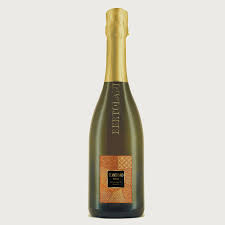 (7) (7) |
| Equivalents | ITA Bianco di Scandiano ESP Vino Blanco de Scandiano FRA Bianco di Scandiano RO Bianco di Scandiano |
| Note of the equivalents | The Italian term is translated, the word ‘wine’ is added to specify the type of product. |
| Institution | Università degli Studi di Modena e Reggio Emilia, Dipartimento di Studi Linguistici e Culturali |
| Date of the sheet | 03/08/2021 |
| Last date of change | 25/04/2023 |
| Author Revisor | Chiara Buschi Gloria Zanella |
| Sources | 1) https://it.everybodywiki.com/Bianco_di_Scandiano_spumante 2) http://www.vino-online.it/scheda/vino-colli-di-scandiano-e-di-canossa-bianco-doc.htm 3) https://turismo.comune.re.it/en/scandiano/flavours/typical-products/colli-di-scandiano-e-di-canossa-wines?set_language=en 4) https://it.wikipedia.org/wiki/Bianco_di_Scandiano 5) https://www.darapri.it/immagini/nuove_mie/depero/etimologia.html 6) https://en.wiktionary.org/wiki/wine#Etymology_1 7) https://bertolanialfredo.it/i-nostri-vini/i-bianchi/scandiano-dolce-frizzante-uva-spergola/ |